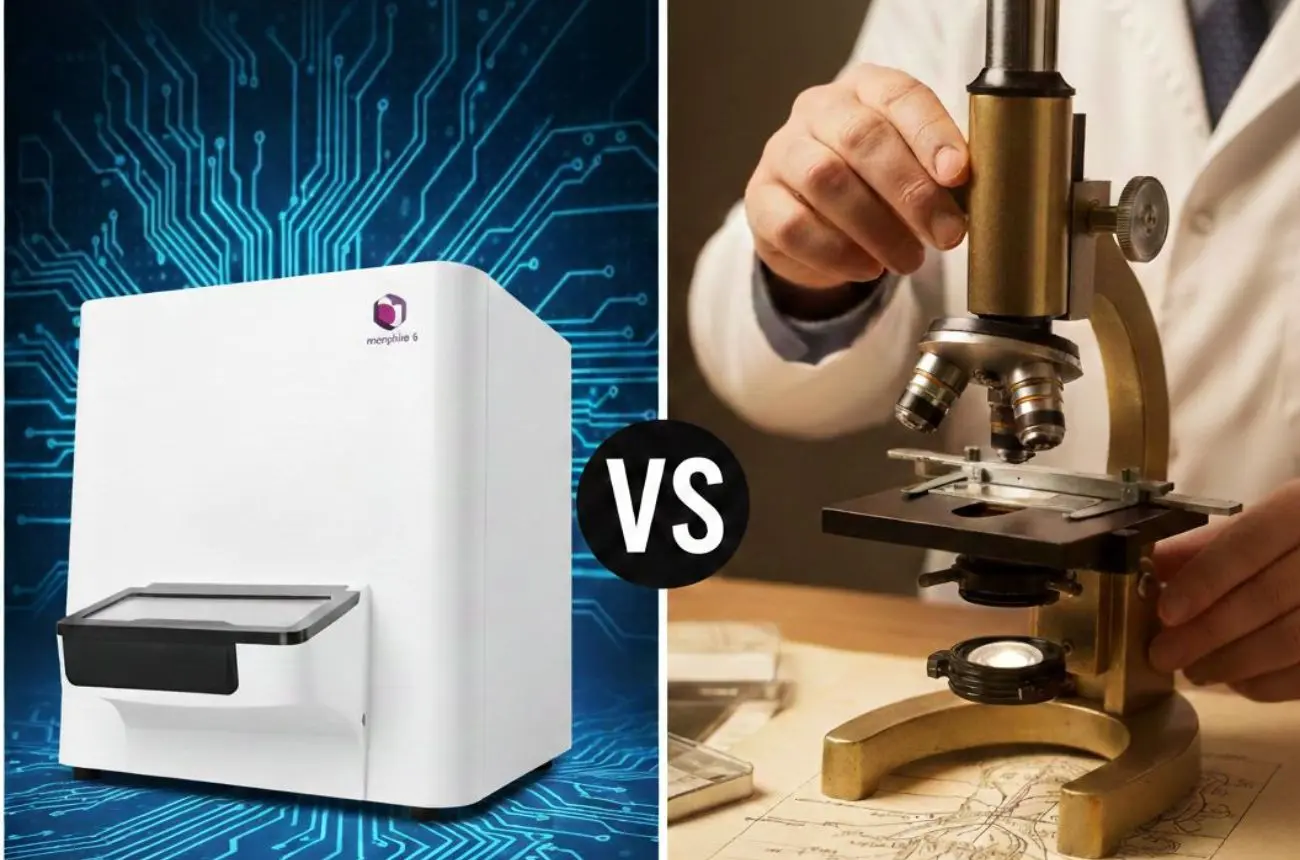
Traditional microscopes have long been the gold standard in pathology, but digital pathology scanners are rapidly redeining what's possible. This blog breaks down the key differences between whole slide scanners and conventional microscopes, covering workflow, image quality, scalability, and real-world applications, so you can make a confident, informed decision for your lab.
A traditional microscope is an optical instrument that magnifies tissue samples on glass slides using lenses and light. Pathologists physically look through the eyepiece, adjusting magnification and focus manually. It's tactile, direct, and familiar, but inherently limited by geography, throughput, and the human eye.
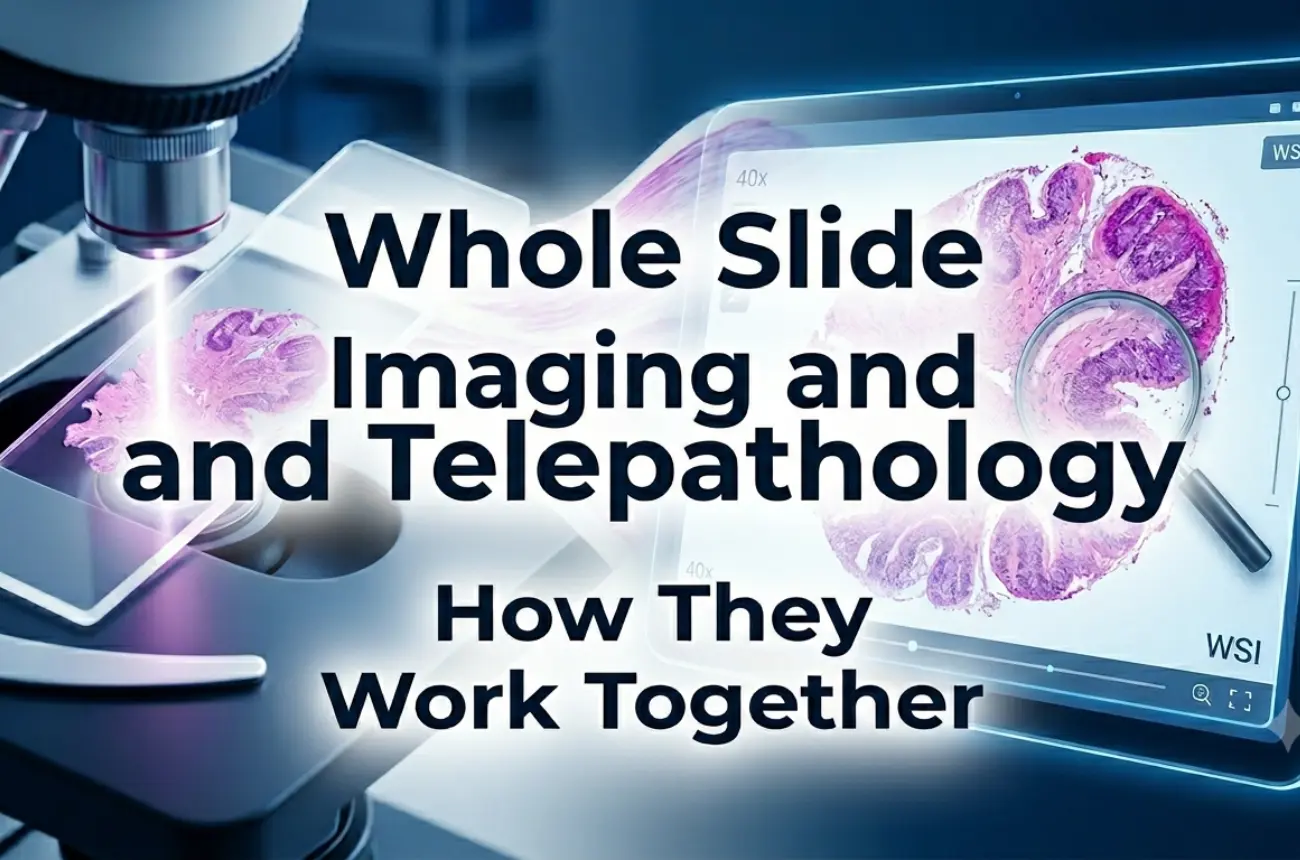
A digital pathology scanner (also called a whole slide scanner or automated microscope slide scanner) converts glass slides into high-resolution digital images, known as Whole Slide Images (WSI), that can be viewed, analyzed, shared, and archived on any connected device. These scanners capture an entire slide at multiple magnifications with consistent, automated focus across every field of view.
With a traditional microscope, a pathologist places a slide, selects magnification, adjusts the focus manually, and examines regions of interest one field at a time. This process is time-consuming and cannot scale easily.
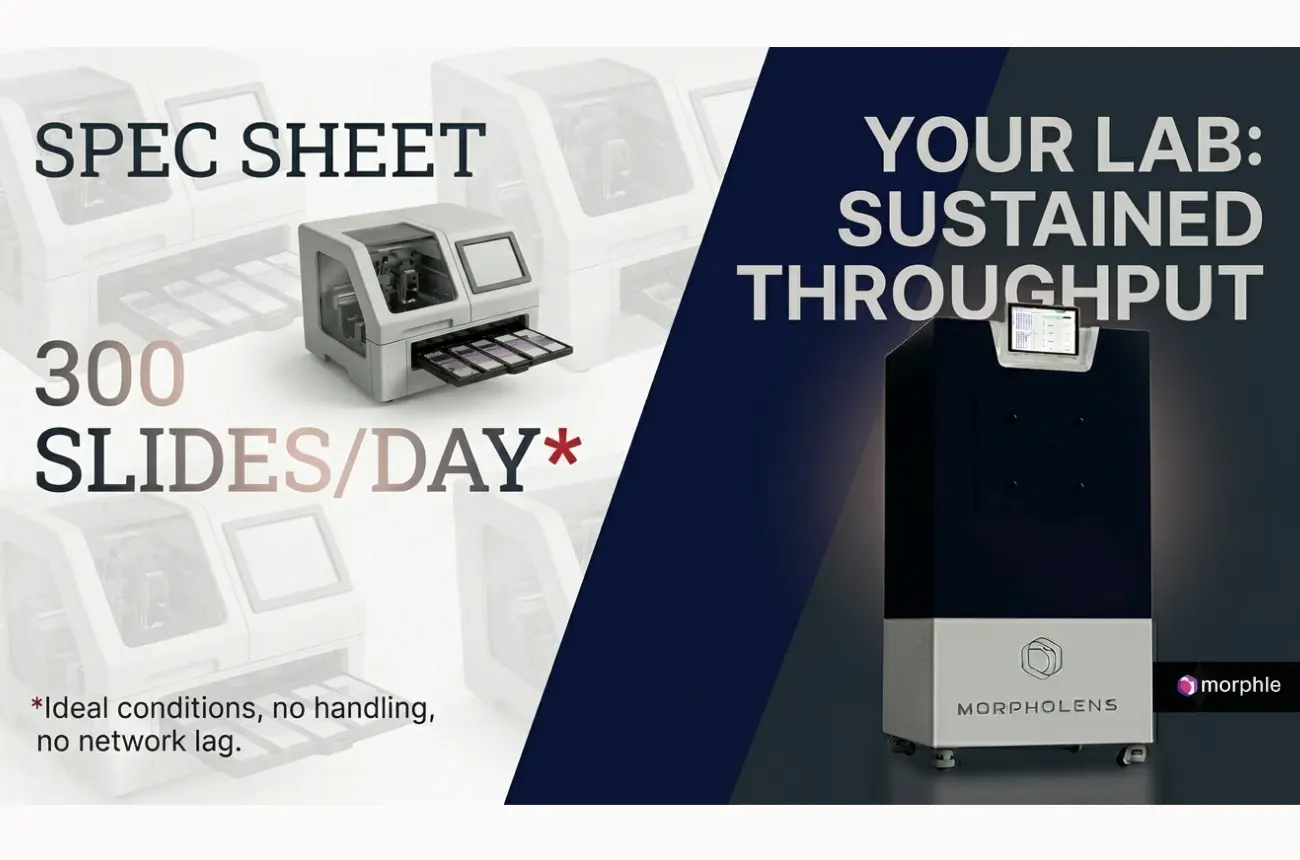
A digital pathology scanner automates the entire capture process. Slides are loaded; either individually or in batches, and the scanner produces a complete, navigable digital image in minutes. Once digitized, slides can be instantly shared with remote consultants, analyzed using AI-powered tools, or retrieved from a digital archive years later without degradation. The contrast in throughput alone is stark: high-end scanners can process hundreds of slides per day, while a single pathologist at a microscope is limited by physical endurance and time.
Both technologies are capable of producing high-quality images, but the conditions under which they do so differ significantly.
Traditional microscopes excel in real-time, dynamic observation. An experienced pathologist can rapidly scan a slide and intuitively navigate to areas of interest. However, image quality is dependent on the individual, the condition of the optics, and ambient lighting.
A digital pathology scanner delivers standardized, reproducible image quality regardless of the operator. Features like autofocus algorithms, multi-layer Z-stacking, and consistent illumination ensure every image is captured at the same quality benchmark. This consistency is critical in multi-site institutions, research collaborations, and teleconsultation workflows. A Slide Scanner for Histology settings, for example, must faithfully reproduce tissue architecture and staining patterns; something modern scanners handle with precision at 20x and 40x equivalent magnifications.
Whole Slide Scanners — Benefits:
Whole Slide Scanners — Limitations:
Traditional Microscopes — Benefits:
Traditional Microscopes — Limitations:
Traditional microscopes remain effective in small clinics or settings with minimal digital infrastructure. However, for the majority of modern use cases, digital pathology scanners hold a clear advantage.
Histopathology and surgical pathologefit enormously from Whole slide imaging, enabling rapid frozen section review, second opinions from remote specialists, and streamlined tumor board presentations. Histology scanner systems are now standard in many academic medical centers for teaching and research. Clinical trials and pharmaceutical research increasingly mandate digital imaging for reproducibility. Cytology, hematology, and even dermatopathology are all being transformed by whole slide imaging.
When evaluating a digital pathology scanner for your institution, consider the following:
The trajectory is clear: pathology is going digital. Regulatory agencies like the FDA and the EU have increasingly validated WSI for primary diagnosis. AI-powered tools for tumor detection, grading, and biomarker quantification are rapidly maturing, and they all depend on high-quality digital slide data generated by digital pathology scanners.
Digital pathology companies at the forefront of this transition are not just building scanners, they're building ecosystems. The convergence of AI, cloud storage, and high-throughput scanning is redefining what a modern pathology lab looks like.
Transitioning to digital pathology isn’t just about replacing microscopes with scanners; it's about redesigning how slides move through your lab’s workflow. Morphle Labs’ whole slide scanners are built with this operational reality in mind.
Beyond high-resolution image capture, Morphle systems integrate directly into existing laboratory workflows through built-in case management and support for both uni-directional and bi-directional LIS integration. This allows labs to automate slide-to-case mapping using barcodes, QR codes, or even handwritten labels, reducing manual data entry and minimizing identification errors during case assembly.
For institutions managing multi-site reporting or remote sign-out, Morphle’s web-based viewing environment enables pathologists to access, review, and annotate whole slide images from any authorized device or location. Batch scanning capabilities further allow technical staff to digitize large volumes of slides with minimal operator intervention, freeing up skilled personnel for higher-value tasks.
By combining consistent 40x imaging with integrated workflow automation, Morphle’s digital pathology platform supports scalable deployment across clinical, research, and teaching environments. Whether you're building a digital archive, enabling teleconsultation, or preparing your lab for AI-assisted analysis, Morphle provides the infrastructure required for a practical transition to digital-first pathology.
.
The shift from traditional microscopes to digital pathology is no longer a question of if ; it's a question of when and with whom. If your lab is ready to scale, collaborate remotely, and leverage the power of AI-assisted diagnostics, a best-in-class whole slide scanner is your next step.
Explore Morphle Labs' digital pathology solutions →
Get in touch with the Morphle team today for a personalized demo, pricing information, and to find out how their scanners can integrate into your existing workflow. The future of pathology is digital, and it starts here.


.webp)
.webp)
.webp)
.webp)
.webp)
.webp)