Using AI to Eliminate Mundane Tasks in Pathology

Discover how AI and digital pathology scanners eliminate repetitive tasks in pathology, improving efficiency, consistency, and AI-ready workflows.
5 mins

Using AI to Eliminate Mundane Tasks in Pathology

TL;DR

Artificial intelligence is transforming pathology by automating repetitive, time-consuming tasks such as slide scanning, image pre-processing, case triaging, and quality checks. When combined with a high-performance Digital pathology scanner, AI reduces turnaround time, minimizes human error, and allows pathologists to focus on what truly matters; diagnosis and clinical decision-making.

What You’ll Learn

  • Why mundane tasks are a bottleneck in modern pathology workflows

  • How AI integrates with digital pathology infrastructure

  • The role of the Digital pathology scanner in enabling AI

  • Real-world applications of AI-driven pathology automation

  • What labs should consider when adopting AI-enabled scanners

The Hidden Cost of Mundane Tasks in Pathology

Pathology is knowledge-intensive, but much of a pathologist’s day is spent on tasks that do not require diagnostic expertise. Manual slide handling, microscope adjustments, repetitive scanning, re-checking focus quality, and administrative coordination consume valuable time.

As workloads increase due to rising cancer incidence, screening programs, and staff shortages, these inefficiencies become unsustainable. The result is delayed reports, pathologist burnout, and inconsistent quality.

This is where AI-enabled digital pathology fundamentally changes the equation.

AI Begins With Digitization

AI in pathology cannot exist without digitization. Algorithms require high-quality, standardized digital slides to function reliably. This makes the Digital pathology scanner the foundational component of any AI strategy.

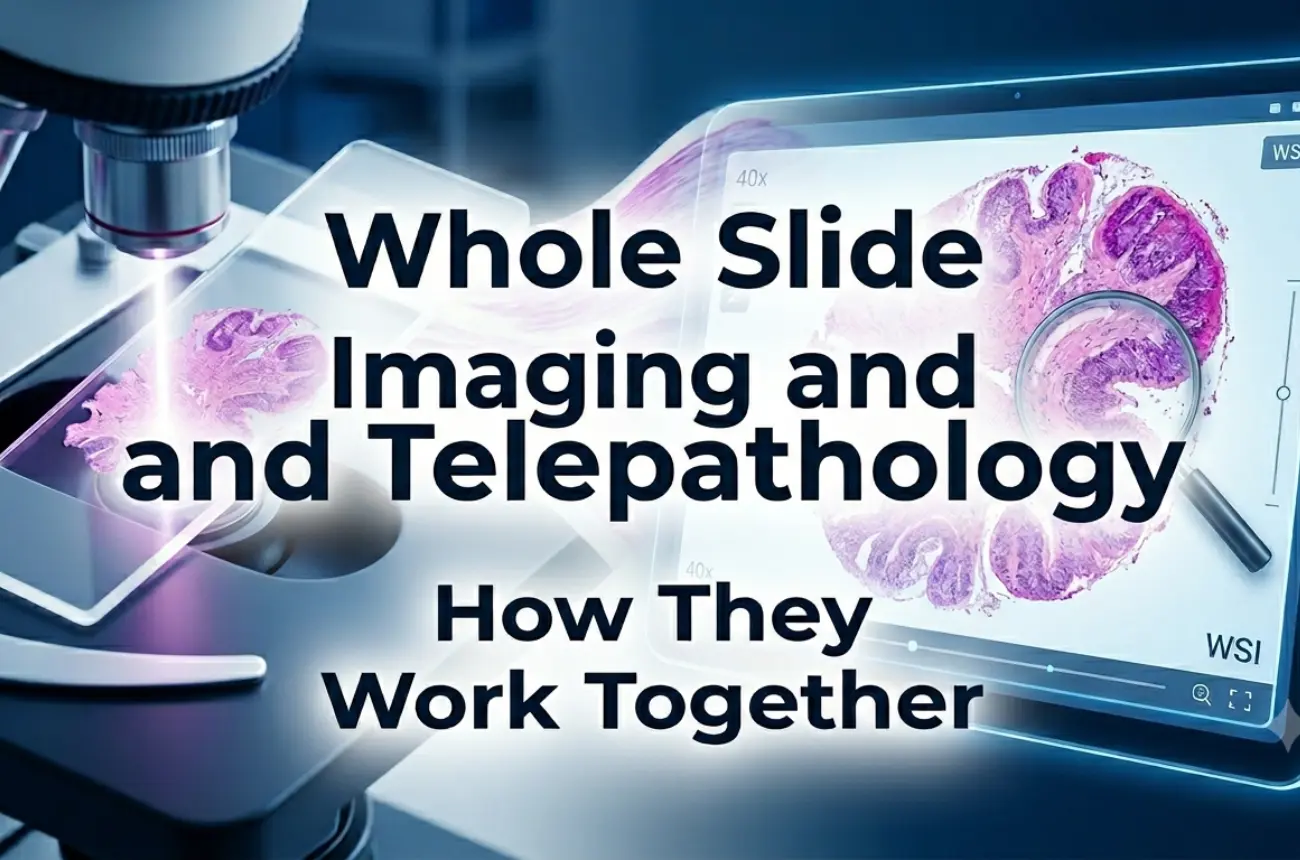
Through Whole Slide Scanning, glass slides are converted into high-resolution digital files that replicate; and often exceed; the experience of traditional microscopy. Once slides are digitized, AI systems can begin automating downstream tasks.

Without consistent image quality, focus accuracy, and color fidelity from the scanner, AI outputs become unreliable. This is why scanner performance directly impacts AI success.

How AI Eliminates Mundane Tasks

1. Automated Slide Quality Control

AI can automatically detect common scanning issues such as out-of-focus regions, tissue folds, air bubbles, or incomplete tissue capture. Instead of technicians manually reviewing every slide, AI flags only problematic cases for intervention.

Modern scanners designed as an Automated microscope slide scanner integrate these checks directly into the scanning workflow, reducing rescans and saving hours daily.

2. Smart Case Triage

AI algorithms can pre-screen digitized slides and prioritize cases based on complexity or suspected abnormality. Routine or clearly negative cases move faster, while high-risk slides are flagged for immediate attention.

This is particularly impactful in Slide Scanner Histology workflows where large volumes of H&E slides are processed daily.

3. Region of Interest Detection

Rather than forcing pathologists to manually search entire slides, AI can highlight regions most likely to contain diagnostically relevant features; mitotic figures, tumor margins, inflammatory clusters, or necrotic zones.

This transforms the pathologist’s role from “searching” to “interpreting,” improving both speed and accuracy.

4. Workflow Automation and Reporting

AI does not stop at image analysis. Integrated systems can automate case assignment, metadata tagging, report structuring, and even comparison with historical cases. The result is a smoother, more predictable workflow with fewer administrative interruptions.

Why the Digital Pathology Scanner Matters More Than Ever

As AI adoption grows, not all scanners are created equal. A robust Digital pathology scanner must do more than capture images; it must support AI-ready workflows.

Key scanner capabilities that enable effective AI include:

  • Consistent focus across tissue thickness

  • Accurate color reproduction for algorithm reliability

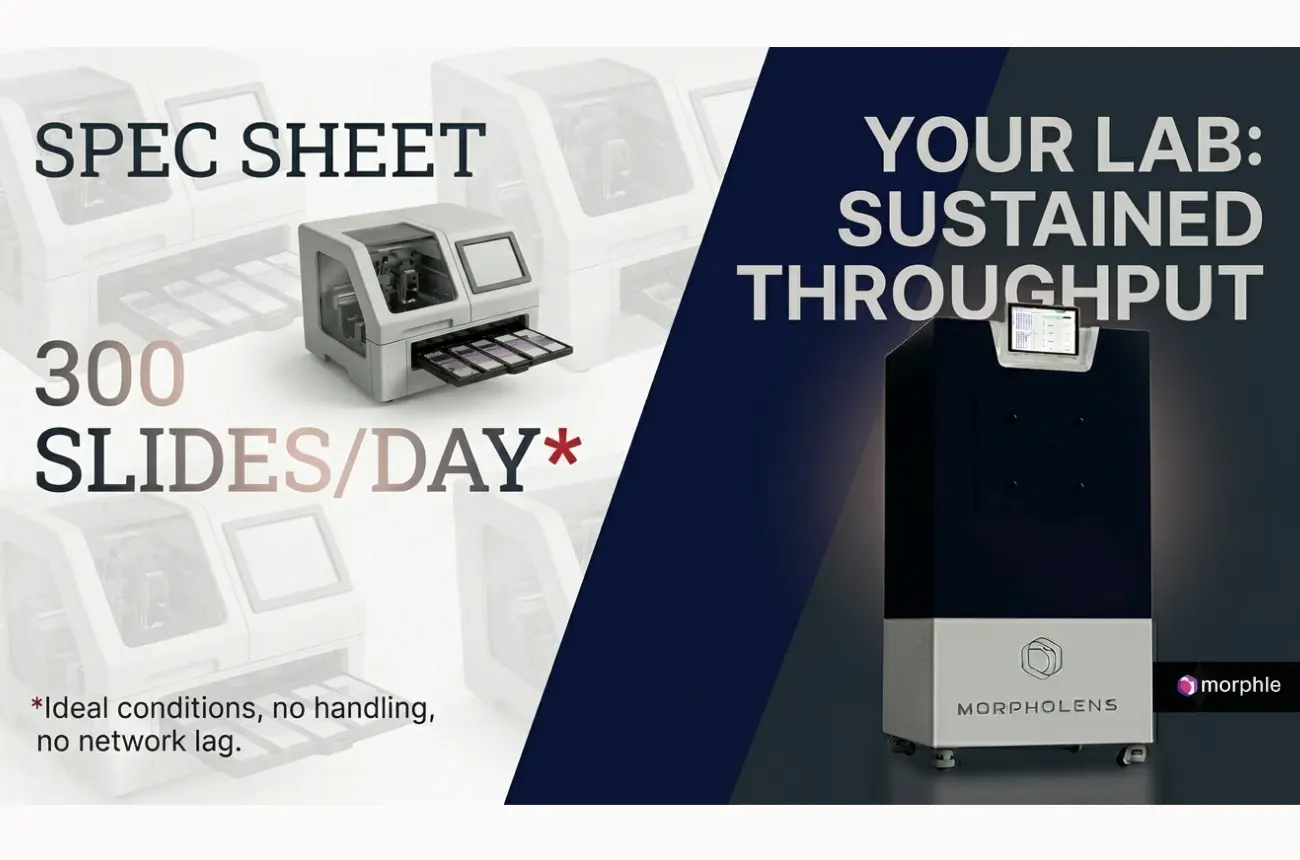
  • High-throughput scanning without compromising quality

  • Seamless data integration with AI and LIS systems

Labs evaluating a Digital Pathology Scanner price should consider not just upfront cost, but long-term efficiency gains, reduced rescan rates, and AI compatibility.

Where MorphoLens Fits In

MorphoLens scanners are designed with AI-driven pathology workflows in mind. Built for reliability and consistency, MorphoLens supports high-quality Whole Slide Scanning that forms a strong foundation for AI applications such as quality control, triaging, and computational pathology.

Rather than positioning AI as a bolt-on feature, MorphoLens focuses on delivering scanner performance that AI systems can trust; stable optics, precise automation, and workflow-friendly software integration. This makes it easier for labs to adopt AI incrementally, without disrupting existing diagnostic practices.

For labs exploring AI but concerned about complexity or scalability, this approach reduces risk while keeping future expansion open.

Benefits vs. Limitations of AI in Pathology

Benefits

  • Significant reduction in repetitive manual tasks

  • Faster turnaround times

  • Improved consistency and quality

  • Better utilization of pathologist expertise

  • Scalable workflows for growing slide volumes

Limitations

  • AI is only as good as the data it receives

  • Poor scanning quality limits algorithm accuracy

  • Regulatory and validation requirements vary by region

  • Human oversight remains essential

AI is not a replacement for pathologists; it is a force multiplier.

What Labs Should Consider Before Adopting AI

Before investing in AI, labs should evaluate:

  • Scanner image quality and throughput

  • Compatibility with AI algorithms and future upgrades

  • Data storage and network infrastructure

  • Validation and compliance requirements

  • Vendor support and long-term roadmap

Choosing the right Digital pathology scanner early prevents costly rework later.

The Future: From Automation to Augmentation

The next phase of AI in pathology goes beyond eliminating mundane tasks. Predictive analytics, outcome correlation, and precision medicine applications are already emerging. As AI matures, pathologists will spend less time managing slides and more time delivering clinical insight.

Labs that invest today in AI-ready digital pathology infrastructure will be best positioned for this future.

AI can only perform as well as the digital foundation beneath it. If you’re evaluating how to modernize your pathology workflow, reduce manual effort, and prepare for AI adoption, start with the right scanner.

Explore how MorphoLens digital pathology scanners can support AI-driven workflows and help your lab move beyond mundane tasks; toward smarter, faster, and more scalable pathology.

Learn more about digital pathology and various usecases

Read More
Contact Us
Afghanistan (+93)
Albania (+355)
Algeria (+213)
American Samoa (+1-684)
Andorra (+376)
Angola (+244)
Anguilla (+1-264)
Antarctica (+672)
Antigua and Barbuda (+1-268)
Argentina (+54)
Armenia (+374)
Aruba (+297)
Australia (+61)
Austria (+43)
Azerbaijan (+994)
Bahamas (+1-242)
Bahrain (+973)
Bangladesh (+880)
Barbados (+1-246)
Belarus (+375)
Belgium (+32)
Belize (+501)
Benin (+229)
Bermuda (+1-441)
Bhutan (+975)
Bolivia (+591)
Bosnia and Herzegovina (+387)
Botswana (+267)
Brazil (+55)
British Indian Ocean Territory (+246)
Brunei (+673)
Bulgaria (+359)
Burkina Faso (+226)
Burundi (+257)
Cambodia (+855)
Cameroon (+237)
Canada (+1)
Cape Verde (+238)
Cayman Islands (+1-345)
Central African Republic (+236)
Chad (+235)
Chile (+56)
China (+86)
Christmas Island (+53)
Cocos Islands (+61)
Colombia (+57)
Comoros (+269)
Congo (DRC) (+243)
Congo (Republic) (+242)
Cook Islands (+682)
Costa Rica (+506)
Cote D'Ivoire (+225)
Croatia (+385)
Cuba (+53)
Cyprus (+357)
Czech Republic (+420)
Denmark (+45)
Djibouti (+253)
Dominica (+1-767)
Dominican Republic (+1-809 and +1-829  )
East Timor (+670)
Ecuador (+593 )
Egypt (+20)
El Salvador (+503)
Equatorial Guinea (+240)
Eritrea (+291)
Estonia (+372)
Ethiopia (+251)
Falkland Islands (+500)
Faroe Islands (+298)
Fiji (+679)
Finland (+358)
France (+33)
French Guiana (+594)
French Polynesia (+689)
Gabon (+241)
Gambia (+220)
Georgia (+995)
Germany (+49)
Ghana (+233)
Gibraltar (+350)
Greece (+30)
Greenland (+299)
Grenada (+1-473)
Guadeloupe (+590)
Guam (+1-671)
Guatemala (+502)
Guinea (+224)
Guinea-Bissau (+245)
Guyana (+592)
Haiti (+509)
Honduras (+504)
Hong Kong (+852)
Hungary (+36)
Iceland (+354)
India (+91)
Indonesia (+62)
Iran (+98)
Iraq (+964)
Ireland (+353)
Israel (+972)
Italy (+39)
Jamaica (+1-876)
Japan (+81)
Jordan (+962)
Kazakhstan (+7)
Kenya (+254)
Kiribati (+686)
Kuwait (+965)
Kyrgyzstan (+996)
Laos (+856)
Latvia (+371)
Lebanon (+961)
Lesotho (+266)
Liberia (+231)
Libya (+218)
Liechtenstein (+423)
Lithuania (+370)
Luxembourg (+352)
Macau (+853)
Macedonia (+389)
Madagascar (+261)
Malawi (+265)
Malaysia (+60)
Maldives (+960)
Mali (+223)
Malta (+356)
Marshall Islands (+692)
Martinique (+596)
Mauritania (+222)
Mauritius (+230)
Mayotte (+269)
Mexico (+52)
Micronesia (+691)
Moldova (+373)
Monaco (+377)
Mongolia (+976)
Montserrat (+1-664)
Morocco (+212)
Mozambique (+258)
Myanmar (+95)
Namibia (+264)
Nauru (+674)
Nepal (+977)
Netherlands (+31)
Netherlands Antilles (+599)
New Caledonia (+687)
New Zealand (+64)
Nicaragua (+505)
Niger (+227)
Nigeria (+234)
Niue (+683)
Norfolk Island (+672)
Northern Mariana Islands (+1-670)
North Korea (+850)
Norway (+47)
Oman (+968)
Pakistan (+92)
Palau (+680)
Palestinian State (+970)
Panama (+507)
Papua New Guinea (+675)
Paraguay (+595)
Peru (+51)
Philippines (+63)
Poland (+48)
Portugal (+351)
Puerto Rico (+1-787 or +1-939)
Qatar (+974 )
Reunion (+262)
Romania (+40)
Russia (+7)
Rwanda (+250)
Saint Helena (+290)
Saint Kitts and Nevis (+1-869)
Saint Lucia (+1-758)
Saint Pierre and Miquelon (+508)
Saint Vincent and the Grenadines (+1-784)
Samoa (+685)
San Marino (+378)
Sao Tome and Principe (+239)
Saudi Arabia (+966)
Senegal (+221)
Serbia (+381)
Seychelles (+248)
Sierra Leone (+232)
Singapore (+65)
Slovakia (+421)
Slovenia (+386)
Solomon Islands (+677)
Somalia (+252)
South Africa (+27)
South Korea (+82)
South Sudan (+211)
Spain (+34)
Sri Lanka (+94)
Sudan (+249)
Suriname (+597)
Svalbard and Jan Mayen Islands (+47)
Swaziland (+268)
Sweden (+46)
Switzerland (+41)
Syria (+963)
Taiwan (+886)
Tajikistan (+992)
Tanzania (+255)
Thailand (+66)
Togo (+228)
Tokelau (+690)
Tonga (+676)
Trinidad and Tobago (+1-868)
Tunisia (+216)
Turkey (+90)
Turkmenistan (+993)
Turks and Caicos Islands (+1-649)
Tuvalu (+688)
Uganda (+256)
Ukraine (+380)
United Arab Emirates (+971)
United Kingdom (+44)
United States (+1)
Uruguay (+598)
Uzbekistan (+998)
Vanuatu (+678)
Vatican City State (+418)
Venezuela (+58)
Vietnam (+84)
Virgin Islands, British (+1-284)
Virgin Islands, United States (+1-340)
Wallis and Futuna Islands (+681)
Western Sahara (+212)
Yemen (+967)
Zambia (+260)
Zimbabwe (+263)