Slide Scanner Buyer’s Checklist: 15 Questions to Ask

A practical buyer’s checklist with 15 essential questions to ask before choosing a digital pathology scanner for reliable, scalable slide scanning.
2 mins

Slide Scanner Buyer’s Checklist: 15 Questions to Ask

Selecting a slide scanner is a long-term infrastructure decision, not a feature comparison exercise. Once installed, a Digital pathology scanner defines image quality, throughput, diagnostic confidence, storage costs, and your ability to scale into AI and telepathology. For labs evaluating scanners for routine histology or high-volume workflows, asking the right questions upfront prevents costly compromises later.

Below are 15 essential questions, with clear guidance on why each one matters.

The 15 Questions That Matter

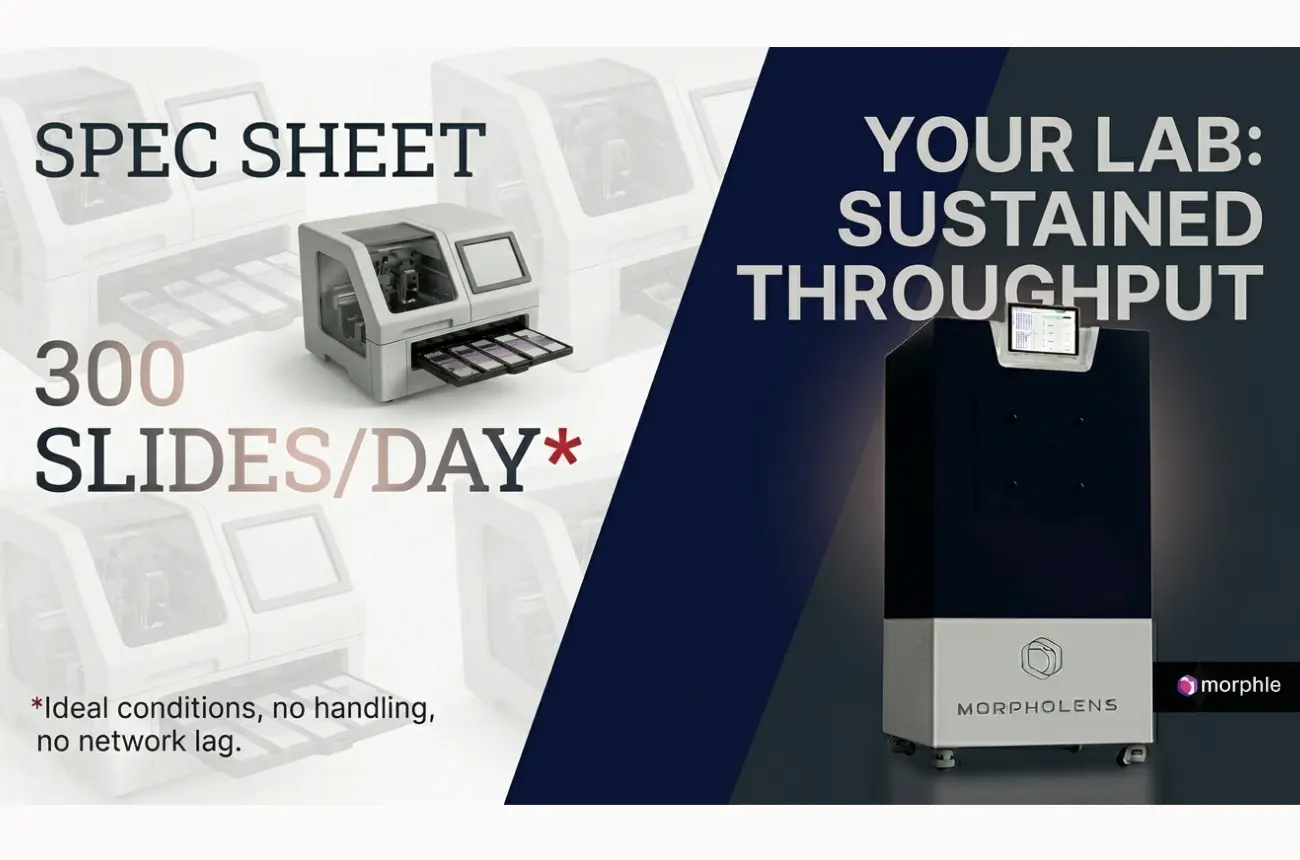
1. What is the scanner’s sustained daily throughput?

Manufacturers often quote peak scan speeds under ideal conditions. What matters is how the scanner performs continuously; across full shifts, mixed slide types, and long unattended runs.

2. How consistent is focus across uneven or thick tissue sections?

Real-world samples are rarely flat. In Slide Scanner Histology, inconsistent focus leads to missed diagnostic regions and repeat scans, slowing down reporting.

3. Is this a fully automated or semi-automated system?

A true Automated microscope slide scanner handles slide loading, scanning, and error detection with minimal user input. Semi-automation increases labor dependency and variability.

4. How often does the scanner require manual intervention during runs?

Frequent pauses due to focus errors, slide jams, or software prompts break throughput; especially problematic in overnight or high-volume workflows.

5. How reliable is color reproduction across batches and stains?

Consistent color is essential for diagnosis, comparison across cases, and AI analysis. Variability can introduce interpretation bias and retraining overhead.

6. What is the maximum slide capacity per batch?

Batch size determines how often staff must reload the system. Larger, stable batches improve predictability and reduce operational overhead.

7. How does the scanner handle barcode reading and identification errors?

Barcode misreads create traceability risks that affect the entire diagnostic chain. Reliable barcode handling is critical for clinical confidence.

8. What compression and file formats does the scanner use?

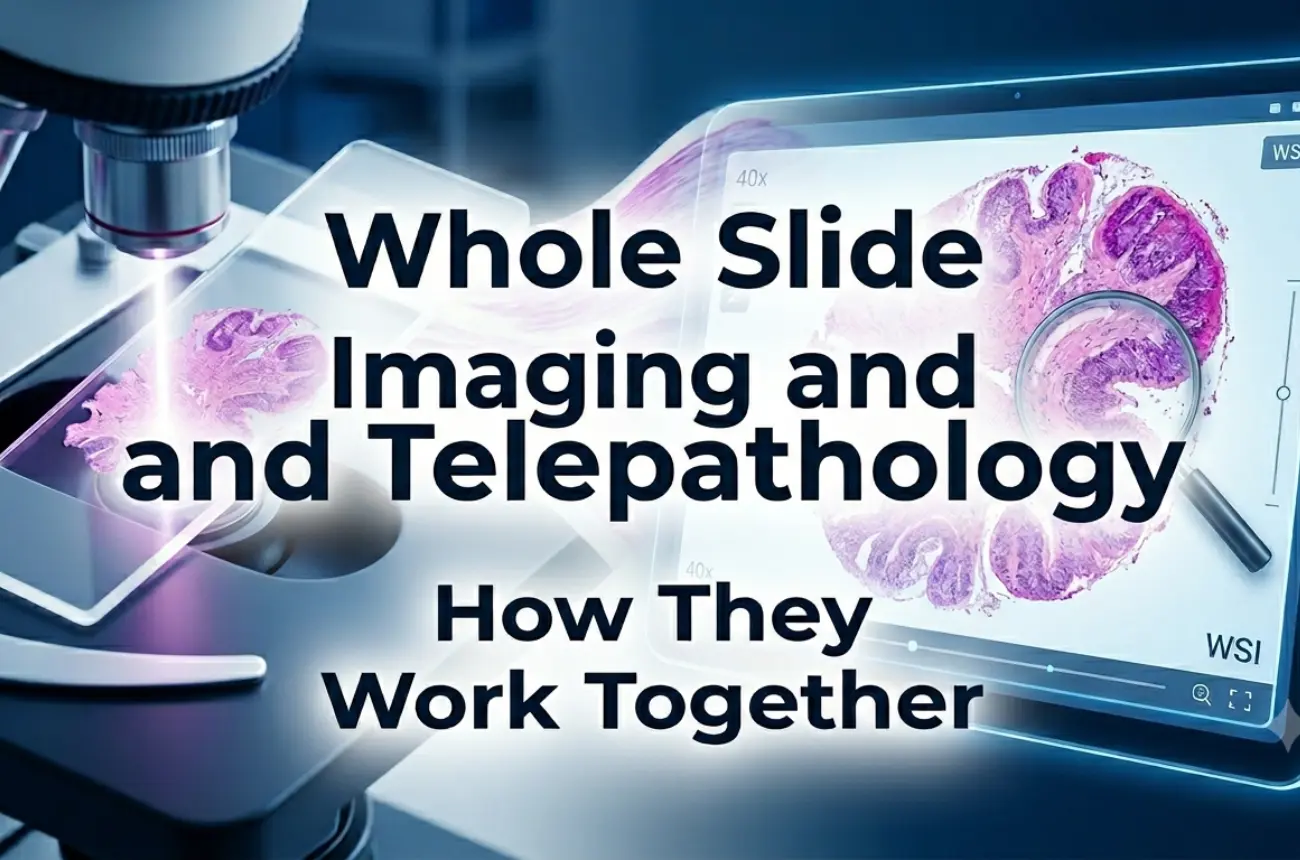
Compression impacts image quality, file size, and storage costs. In Whole Slide Scanning, inflexible or proprietary formats can limit interoperability later.

9. How well does the scanner software integrate with existing systems?

A Pathology slide scanner should integrate smoothly with viewers, LIS, and storage infrastructure; without forcing workflow redesign.

10. What is included in the Digital Pathology Scanner price?

The hardware cost is only part of the equation. Ask about service contracts, software licenses, upgrades, and long-term support costs.

11. How scalable is the platform as slide volumes grow?

Many labs outgrow their scanners within a few years. Scalability; both technical and operational; protects your investment.

12. Is the scanner validated or suitable for clinical diagnostic use?

Even research labs should consider this. A scanner unsuitable for clinical validation may limit future diagnostic or translational applications.

13. What uptime and reliability data can the vendor share?

High throughput means nothing if downtime is frequent. Ask for real-world uptime metrics, not just warranty terms.

14. Is the scanner designed to support AI workflows?

AI requires consistent focus, color, metadata, and repeatability. Scanner limitations here become major AI bottlenecks later.

15. What do long-term customers say about real-world performance?

Reference calls reveal issues that datasheets don’t; especially around service quality, software stability, and long-term usability.

Why These Questions Matter

A Digital pathology scanner is the foundation of your digital workflow. Weaknesses at the scanning stage propagate into diagnosis, storage, collaboration, and AI pipelines. These questions help labs evaluate scanners based on real operational impact; not marketing claims.

Where Morphle Labs Fits In

Morphle Labs designs digital pathology scanners around real-world lab constraints; high slide volumes, mixed sample quality, and the need for long-term scalability. By prioritizing consistent image quality, automation reliability, and workflow alignment, Morphle addresses many of the challenges these questions are designed to uncover.

Buying a slide scanner isn’t about choosing the most features; it’s about choosing the least compromise.

Use this checklist to guide vendor discussions, pressure-test claims, and select a scanner that will support your lab today and as it scales.

If you’re evaluating Digital pathology scanner options, explore how Morphle Labs approaches scanner design with long-term lab performance in mind.

Learn more about digital pathology and various usecases

Read More
Contact Us
Afghanistan (+93)
Albania (+355)
Algeria (+213)
American Samoa (+1-684)
Andorra (+376)
Angola (+244)
Anguilla (+1-264)
Antarctica (+672)
Antigua and Barbuda (+1-268)
Argentina (+54)
Armenia (+374)
Aruba (+297)
Australia (+61)
Austria (+43)
Azerbaijan (+994)
Bahamas (+1-242)
Bahrain (+973)
Bangladesh (+880)
Barbados (+1-246)
Belarus (+375)
Belgium (+32)
Belize (+501)
Benin (+229)
Bermuda (+1-441)
Bhutan (+975)
Bolivia (+591)
Bosnia and Herzegovina (+387)
Botswana (+267)
Brazil (+55)
British Indian Ocean Territory (+246)
Brunei (+673)
Bulgaria (+359)
Burkina Faso (+226)
Burundi (+257)
Cambodia (+855)
Cameroon (+237)
Canada (+1)
Cape Verde (+238)
Cayman Islands (+1-345)
Central African Republic (+236)
Chad (+235)
Chile (+56)
China (+86)
Christmas Island (+53)
Cocos Islands (+61)
Colombia (+57)
Comoros (+269)
Congo (DRC) (+243)
Congo (Republic) (+242)
Cook Islands (+682)
Costa Rica (+506)
Cote D'Ivoire (+225)
Croatia (+385)
Cuba (+53)
Cyprus (+357)
Czech Republic (+420)
Denmark (+45)
Djibouti (+253)
Dominica (+1-767)
Dominican Republic (+1-809 and +1-829  )
East Timor (+670)
Ecuador (+593 )
Egypt (+20)
El Salvador (+503)
Equatorial Guinea (+240)
Eritrea (+291)
Estonia (+372)
Ethiopia (+251)
Falkland Islands (+500)
Faroe Islands (+298)
Fiji (+679)
Finland (+358)
France (+33)
French Guiana (+594)
French Polynesia (+689)
Gabon (+241)
Gambia (+220)
Georgia (+995)
Germany (+49)
Ghana (+233)
Gibraltar (+350)
Greece (+30)
Greenland (+299)
Grenada (+1-473)
Guadeloupe (+590)
Guam (+1-671)
Guatemala (+502)
Guinea (+224)
Guinea-Bissau (+245)
Guyana (+592)
Haiti (+509)
Honduras (+504)
Hong Kong (+852)
Hungary (+36)
Iceland (+354)
India (+91)
Indonesia (+62)
Iran (+98)
Iraq (+964)
Ireland (+353)
Israel (+972)
Italy (+39)
Jamaica (+1-876)
Japan (+81)
Jordan (+962)
Kazakhstan (+7)
Kenya (+254)
Kiribati (+686)
Kuwait (+965)
Kyrgyzstan (+996)
Laos (+856)
Latvia (+371)
Lebanon (+961)
Lesotho (+266)
Liberia (+231)
Libya (+218)
Liechtenstein (+423)
Lithuania (+370)
Luxembourg (+352)
Macau (+853)
Macedonia (+389)
Madagascar (+261)
Malawi (+265)
Malaysia (+60)
Maldives (+960)
Mali (+223)
Malta (+356)
Marshall Islands (+692)
Martinique (+596)
Mauritania (+222)
Mauritius (+230)
Mayotte (+269)
Mexico (+52)
Micronesia (+691)
Moldova (+373)
Monaco (+377)
Mongolia (+976)
Montserrat (+1-664)
Morocco (+212)
Mozambique (+258)
Myanmar (+95)
Namibia (+264)
Nauru (+674)
Nepal (+977)
Netherlands (+31)
Netherlands Antilles (+599)
New Caledonia (+687)
New Zealand (+64)
Nicaragua (+505)
Niger (+227)
Nigeria (+234)
Niue (+683)
Norfolk Island (+672)
Northern Mariana Islands (+1-670)
North Korea (+850)
Norway (+47)
Oman (+968)
Pakistan (+92)
Palau (+680)
Palestinian State (+970)
Panama (+507)
Papua New Guinea (+675)
Paraguay (+595)
Peru (+51)
Philippines (+63)
Poland (+48)
Portugal (+351)
Puerto Rico (+1-787 or +1-939)
Qatar (+974 )
Reunion (+262)
Romania (+40)
Russia (+7)
Rwanda (+250)
Saint Helena (+290)
Saint Kitts and Nevis (+1-869)
Saint Lucia (+1-758)
Saint Pierre and Miquelon (+508)
Saint Vincent and the Grenadines (+1-784)
Samoa (+685)
San Marino (+378)
Sao Tome and Principe (+239)
Saudi Arabia (+966)
Senegal (+221)
Serbia (+381)
Seychelles (+248)
Sierra Leone (+232)
Singapore (+65)
Slovakia (+421)
Slovenia (+386)
Solomon Islands (+677)
Somalia (+252)
South Africa (+27)
South Korea (+82)
South Sudan (+211)
Spain (+34)
Sri Lanka (+94)
Sudan (+249)
Suriname (+597)
Svalbard and Jan Mayen Islands (+47)
Swaziland (+268)
Sweden (+46)
Switzerland (+41)
Syria (+963)
Taiwan (+886)
Tajikistan (+992)
Tanzania (+255)
Thailand (+66)
Togo (+228)
Tokelau (+690)
Tonga (+676)
Trinidad and Tobago (+1-868)
Tunisia (+216)
Turkey (+90)
Turkmenistan (+993)
Turks and Caicos Islands (+1-649)
Tuvalu (+688)
Uganda (+256)
Ukraine (+380)
United Arab Emirates (+971)
United Kingdom (+44)
United States (+1)
Uruguay (+598)
Uzbekistan (+998)
Vanuatu (+678)
Vatican City State (+418)
Venezuela (+58)
Vietnam (+84)
Virgin Islands, British (+1-284)
Virgin Islands, United States (+1-340)
Wallis and Futuna Islands (+681)
Western Sahara (+212)
Yemen (+967)
Zambia (+260)
Zimbabwe (+263)